

If you only know the Algarve by its beaches, you’re missing some of the story. Just inland from Albufeira sits the Ponte Medieval de Paderne, a modest stone bridge that has carried people, animals, carts, and quiet moments across the Quarteira River for centuries. It was built to last, not to impress.
The Medieval Bridge of Paderne. Why it still matters?
The Ponte Medieval de Paderne connects more than two riverbanks. It links the Algarve’s inland past with the modern region people see today. Set in a shallow valley surrounded by fields and low hills, the bridge feels largely untouched by time, even though plenty of it has passed underneath.
It’s still used by locals and walkers, and it draws in photographers who appreciate places that haven’t been overworked. It’s an easy stop, but one that tends to linger in the memory.
You’ll often hear it mentioned alongside nearby historic sites, but the bridge doesn’t rely on comparison. It simply carries on doing what it always has.
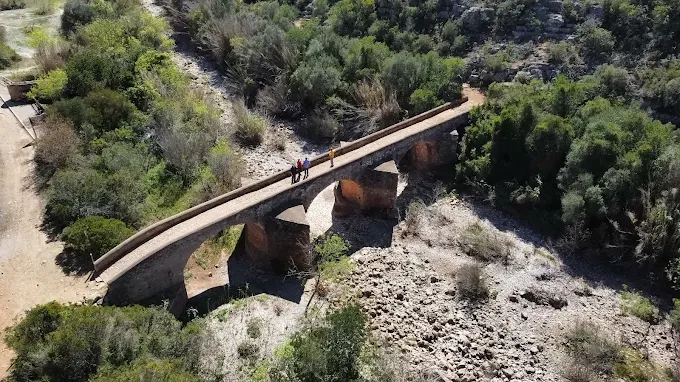
History of the Ponte Medieval de Paderne and its surroundings
The bridge dates back to the medieval period, likely built on earlier Roman or Moorish foundations. This stretch of the Algarve was once a working landscape rather than a leisure destination, and crossings like this were essential for trade, farming, and everyday movement.
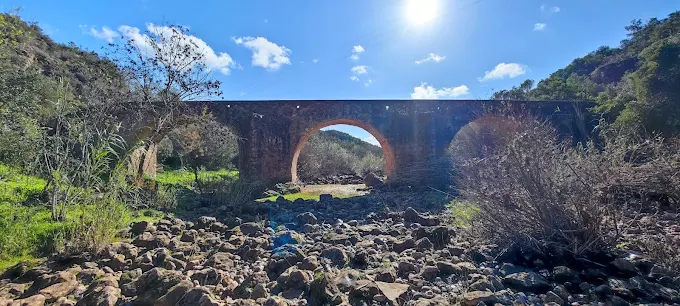
Its stone arches are simple and functional, designed to withstand seasonal flooding and constant use. Repairs over the centuries used local materials, which is why the bridge sits so comfortably within its surroundings.
In the area around the bridge, you may notice information panels sometimes referred to locally as As Placas da Ponte Medieval de Paderne. When present, they help place the bridge within its wider historical context, explaining how the river valley supported agriculture and movement long before coastal towns expanded.
You might also come across the name Ponte Medieval de Paderno in older references. It’s the same bridge, just a different spelling.
How to get to the Ponte Medieval de Paderne and what to expect on arrival
Reaching the bridge is straightforward, particularly if you’re staying in or around Albufeira. A short drive inland brings you to the village of Paderne, from where signposted roads lead down into the river valley.
There’s informal parking nearby, usually on compacted earth rather than tarmac. From there, it’s a short, mostly flat walk to the bridge itself. There are no gates, no ticket booth, and no opening hours.
This isn’t a managed attraction, so a bit of preparation helps. Sensible footwear is useful, especially after rain. In summer, bring water. Shade is limited, and inland heat builds quickly.
Walking trails and the landscape around the Ponte Medieval de Paderne
The Ponte Medieval de Paderne sits within one of the Algarve’s best inland walking areas, following the course of the Quarteira River through open valley landscape.
A short circular route passes through the valley, crosses the bridge, and loops back uphill through farmland and low Barrocal terrain. From below, the bridge is seen at its best, framed by the river and surrounding fields rather than roads or buildings.
The bridge also forms part of the PR1 ABF walking route, a longer circular trail that links key historic sites in the area. Along the way, you pass the medieval bridge, the remains of the old Castle Watermill, and productive agricultural land that shows how water shaped daily life here. The route is well marked and suits anyone comfortable with steady walking.
These paths connect with sections of the Via Algarviana, the long-distance trail that crosses the Algarve from east to west. You don’t need to cover much ground to understand why this landscape worked the way it did.
For a closer look at how these trails continue uphill, our guide to Paderne Castle covers the higher ground in more detail.
Other nearby points of interest worth adding to your day
The bridge works best as part of a relaxed inland itinerary. Pair it with a visit to Paderne village itself, where whitewashed houses and everyday life still take precedence over tourism.
From there, it’s easy to head back towards the coast. Praia da Galé is a good contrast if you want open sand and sea air later in the day. Families might prefer to combine the bridge with one of the Albufeira water parks for a mix of calm and chaos.
Golfers staying nearby will find several courses inland and west of Albufeira, while those building a broader plan can explore more ideas through guides to things to do in Albufeira or the Albufeira historic centre.
Practical tips for visiting the Ponte Medieval de Paderne
- Visit early or late in the day: Morning and late afternoon bring softer light and fewer people. Midday can feel exposed, especially in summer.
- Wear sensible footwear: The stonework around the bridge is uneven, and riverside paths aren’t paved. After rain, the ground can be muddy.
- Allow yourself time: This isn’t a stop-and-go sight. Sit by the river, take in the surroundings, and let the place work at its own pace.
- Think about angles if you’re taking photos: Shots from the riverbed give the bridge more presence, while late sun brings out the texture of the stone far better than midday light.
Why the Ponte Medieval de Paderne deserves a place in your Algarve plans
The Ponte Medieval de Paderne isn’t flashy, and it doesn’t try to be. It’s a reminder that the Algarve existed long before beach towels and golf buggies, shaped by rivers, trade routes, and everyday movement across the land.
Exploring spots like this works best when you’ve got the freedom to move at your own pace. With a range of private villas and well-located apartments, OC Villas makes it easy to explore both the inland Algarve and the coast without feeling tied to one version of the region.
It’s often these quieter stops that give a trip its shape. The bridge is one of them.